Chikungunya in Tricity: Symptoms, Joint Pain and Which Test to Take
Chikungunya and dengue are spread by the same mosquito, and in past seasons the health departments of Chandigarh, Mohali and Panchkula have reported cases of both at the same time. The two illnesses start the same way, with a sudden fever, so many families only realise it is chikungunya when severe joint pain sets in.
This guide explains chikungunya symptoms, how it differs from dengue, which test to take and when, how long the joint pain can last, and what is safe to take at home while you recover. It also lists the SGHRSDC fever packages that include a chikungunya test, with prices.
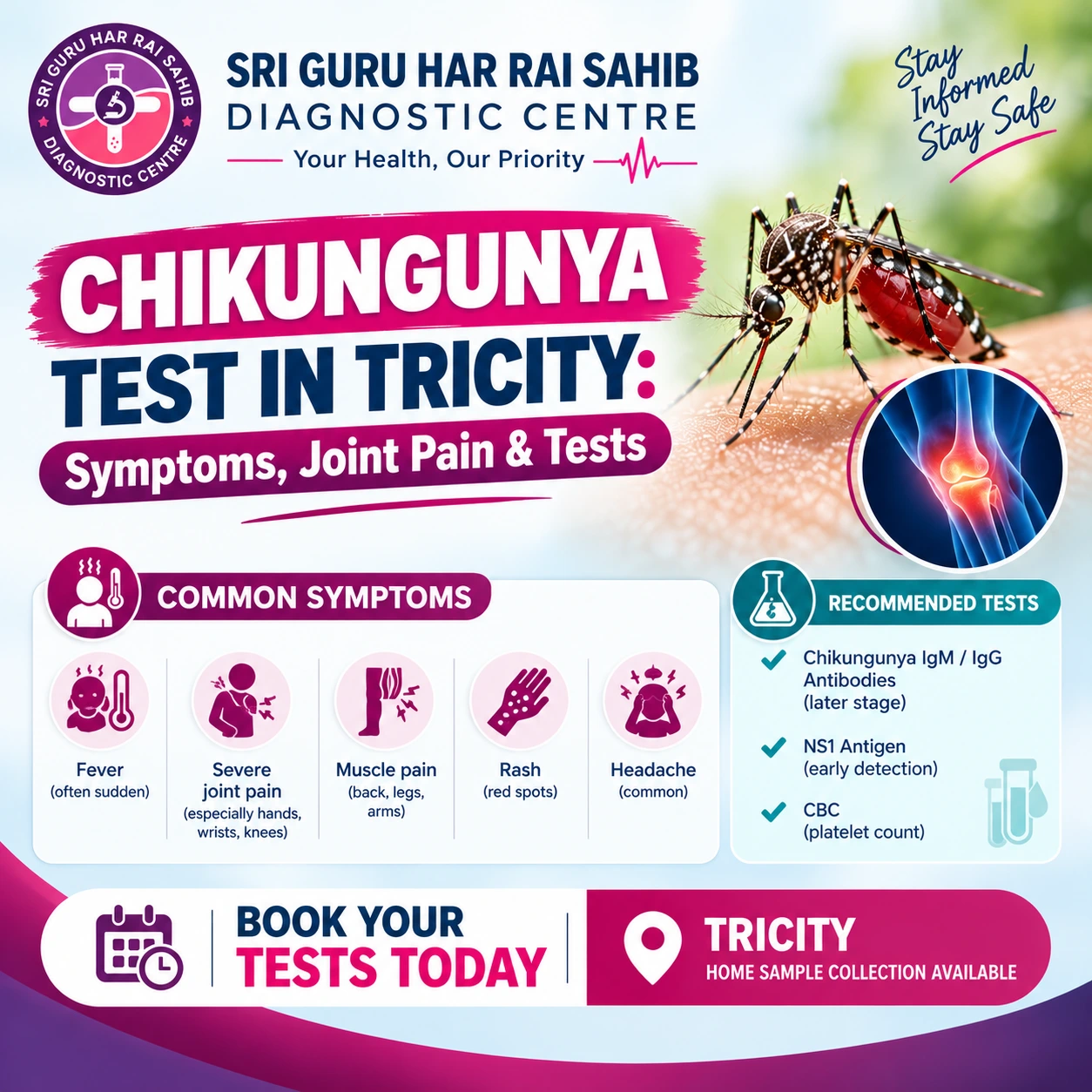
Get tested if fever comes with severe joint pain, especially during dengue season. A chikungunya IgM antibody test is usually useful from about day 4 of illness, and your doctor may advise a PCR test in the first week. Because chikungunya and dengue look alike, doctors usually check for both.
What Is Chikungunya and Why Does It Spread in the Tricity?
Chikungunya is a viral infection that spreads through the bite of infected Aedes aegypti and Aedes albopictus mosquitoes, the same mosquitoes that carry dengue. They breed in clean, stagnant water that collects in desert coolers, flower pot trays, discarded tyres, water tanks, AC trays and construction sites, and they bite mainly in the early morning and late afternoon.
Symptoms usually appear 4 to 8 days after a bite, although it can take anywhere from 2 to 12 days. Chikungunya does not spread directly from person to person. It passes through mosquitoes, which is why clearing stagnant water around your home matters.
Chikungunya Symptoms: How to Recognise Them
Chikungunya typically begins with a sudden fever and severe joint pain. Other common signs include:
- Severe joint pain, often in the hands, wrists, ankles and feet, sometimes with swelling
- Muscle pain and headache
- Nausea and extreme tiredness
- A skin rash in some people
The joint pain can be disabling, which is what sets chikungunya apart from many other viral fevers. Serious complications affecting the eyes, nerves or heart are uncommon, but newborns, older adults and people with long-term conditions such as diabetes or heart disease should see a doctor early.
Chikungunya vs Dengue: What Is Different?
You cannot reliably tell the two apart from symptoms alone, and it is possible to have both infections at the same time. These clues can help, but a blood test is the only way to know.
| Feature | Chikungunya | Dengue |
|---|---|---|
| Onset | Sudden fever | Sudden high fever |
| Joint Pain | Usually the main symptom, often severe, sometimes with swelling | Body, muscle and joint ache is common, but usually less joint-centred |
| Pain Behind the Eyes | Less typical | Common (characteristic feature) |
| Platelets & Bleeding | Less commonly a concern | Platelets can fall around days 3 to 7, and warning signs need watching |
| After the Fever | Joint pain can linger for weeks, sometimes months | Most people recover, but severe dengue needs urgent care |
For the full dengue picture, read our guide on dengue season in the Tricity, including its warning signs and the day-by-day dengue testing guide.
Because dengue can look like chikungunya, treat these as emergencies and go to a hospital straight away:
- Severe or constant stomach pain
- Repeated vomiting, or being unable to keep fluids down
- Bleeding from the nose or gums, or blood in vomit or stools
- Extreme drowsiness, restlessness or confusion
- Fast or difficult breathing
- Very little urine, or fainting on standing
Also see a doctor early if the patient is a baby, an older adult, or has diabetes, heart disease or another long-term condition.
Which Chikungunya Test to Take and When
The right test depends on how many days you have been ill:
| Day of Illness | Test | What It Tells You |
|---|---|---|
| First week (up to about day 8) | RT-PCR, if your doctor advises it | Detects the virus's genetic material during the early phase |
| From about day 4 | Chikungunya IgM antibody | Suggests a recent or current infection |
| Later, or weeks after illness | Chikungunya IgG antibody | Suggests past exposure. A positive IgG with no IgM usually points to an older infection |
An IgM test done on day 1 to 3 can come back negative simply because antibodies have not formed yet, so your doctor may repeat it if symptoms continue. Since the two illnesses overlap, doctors often order a dengue test (NS1, IgM and IgG) and a CBC with platelet count at the same time. See our guide to reading a blood test report and our CBC test in Chandigarh page.
How Long Does Chikungunya Joint Pain Last?
The fever usually settles within a few days. The joint pain typically fades over days to weeks, but in some people, it can last for months or even longer. This is the part that surprises most patients.
See your doctor if joint pain continues beyond a few weeks, if joints stay swollen, or if the pain stops you from doing daily tasks. Options such as physiotherapy or prescribed medicines can help, and your doctor can advise what is suitable for you.
What to Do at Home While You Recover
There is no specific antiviral medicine for chikungunya. Care focuses on rest, fluids and relief of fever and pain:
- Rest and drink plenty of fluids such as water, ORS, coconut water and soups
- Take paracetamol for fever and pain as advised by your doctor
- Avoid aspirin, ibuprofen and similar painkillers until dengue has been ruled out, because they can raise bleeding risk in dengue
- Do not start antibiotics on your own, since chikungunya is a viral infection
- Sleep under a mosquito net or use repellent while ill, so mosquitoes do not carry the virus to others in your home
- Follow up with your doctor and repeat blood tests if advised
How to Prevent Chikungunya at Home
Prevention is the same as for dengue, because the mosquito is the same:
- Keep one "dry day" every week: empty and scrub coolers, buckets, flower pot trays and AC trays
- Cover water tanks and storage containers tightly
- Throw away old tyres, cans and containers that collect water
- Use mosquito nets, window screens and repellents, especially in the morning and late afternoon
- Wear full-sleeved clothes when outdoors
- Support fumigation drives in your colony or society and report stagnant water
Chikungunya and Fever Test Packages at SGHRSDC: Names and Prices
Of our three fever packages, only the Advanced Fever Package includes a chikungunya test.
| Package | Price | Chikungunya Test Included? | What Else It Covers |
|---|---|---|---|
| Basic Fever Package | ₹330 | No | CBC, Rapid Malaria Test, Widal Test (Slide), ESR |
| Essential Fever Package | ₹1,350 | No | CBC, Rapid Malaria Test, Widal Test (Slide), Dengue NS1, IgM and IgG, ESR |
| Advanced Fever Package | ₹2,300 | Yes: Chikungunya IgM and IgG | CBC, ESR, Urine R/E, Widal Test (Slide), Dengue NS1, IgM and IgG, CRP (quantitative), Typhi Dot, SGOT (AST), SGPT (ALT), Rapid Malaria Test, Reticulocyte Count. 52 parameters. |
If you have fever with joint pain during dengue season, the Advanced Fever Package covers chikungunya and dengue together in one visit, along with malaria and typhoid screening. Your doctor can guide the final choice. Prices are as listed on our packages page in October 2026 and may change. For individual test prices, see our Rate List or call us. Not sure how to prepare? Read our blood test instructions guide.
Get Your Chikungunya Test in Chandigarh, Mohali, Zirakpur, Kharar and Panchkula
Sri Guru Har Rai Sahib Diagnostic Centre is an NABL accredited lab serving Chandigarh, Mohali, Kharar, Zirakpur and Panchkula, with automated analysers for accurate results.
- Home sample collection: book from home and let our team come to you
- Online reports: download your reports online
- Lab timings: Monday to Saturday 7:00 AM to 7:00 PM. Sunday 7:00 AM to 2:00 PM at selected centres (Chandigarh Sector 22, Kharar, Dhakoli, Phase 7 Mohali and Mullanpur)
- Helpline: +91 70870 00023
Book your fever test or package or find your nearest centre on our branches page. You may also like our guide to common monsoon diseases and the tests you need and our malaria test guide.
Frequently Asked Questions About Chikungunya
No. They are caused by different viruses, but both spread through the same Aedes mosquitoes and both start with a sudden fever. Chikungunya is more often marked by severe joint pain.
A chikungunya IgM antibody test is usually useful from about day 4 of illness. Your doctor may advise a PCR test in the first week. IgG shows past exposure.
Yes, it is possible to have both infections at once. That is why doctors often test for both, along with a CBC and platelet count.
It usually fades over days to weeks, but in some people it lasts for months or longer. See your doctor if it continues beyond a few weeks.
Most people recover fully and serious complications are uncommon. Newborns, older adults and people with long-term conditions should see a doctor early.
Paracetamol, as advised by your doctor, is the usual first choice. Avoid aspirin, ibuprofen and similar painkillers until dengue has been ruled out, because they can increase bleeding risk in dengue.
Chikungunya IgM and IgG are included in our Advanced Fever Package at ₹2300, along with dengue, malaria, typhoid and other tests. See the Rate List for individual test prices.
Final Word: Do Not Ignore Fever With Joint Pain
Fever with severe joint pain during mosquito season deserves a test, not a wait-and-watch. Get tested for chikungunya and dengue together, avoid risky painkillers until dengue is ruled out, and keep your surroundings free of stagnant water.
Book your test today and get accurate reports from a NABL accredited lab near you.