 By SGHRSDC Team
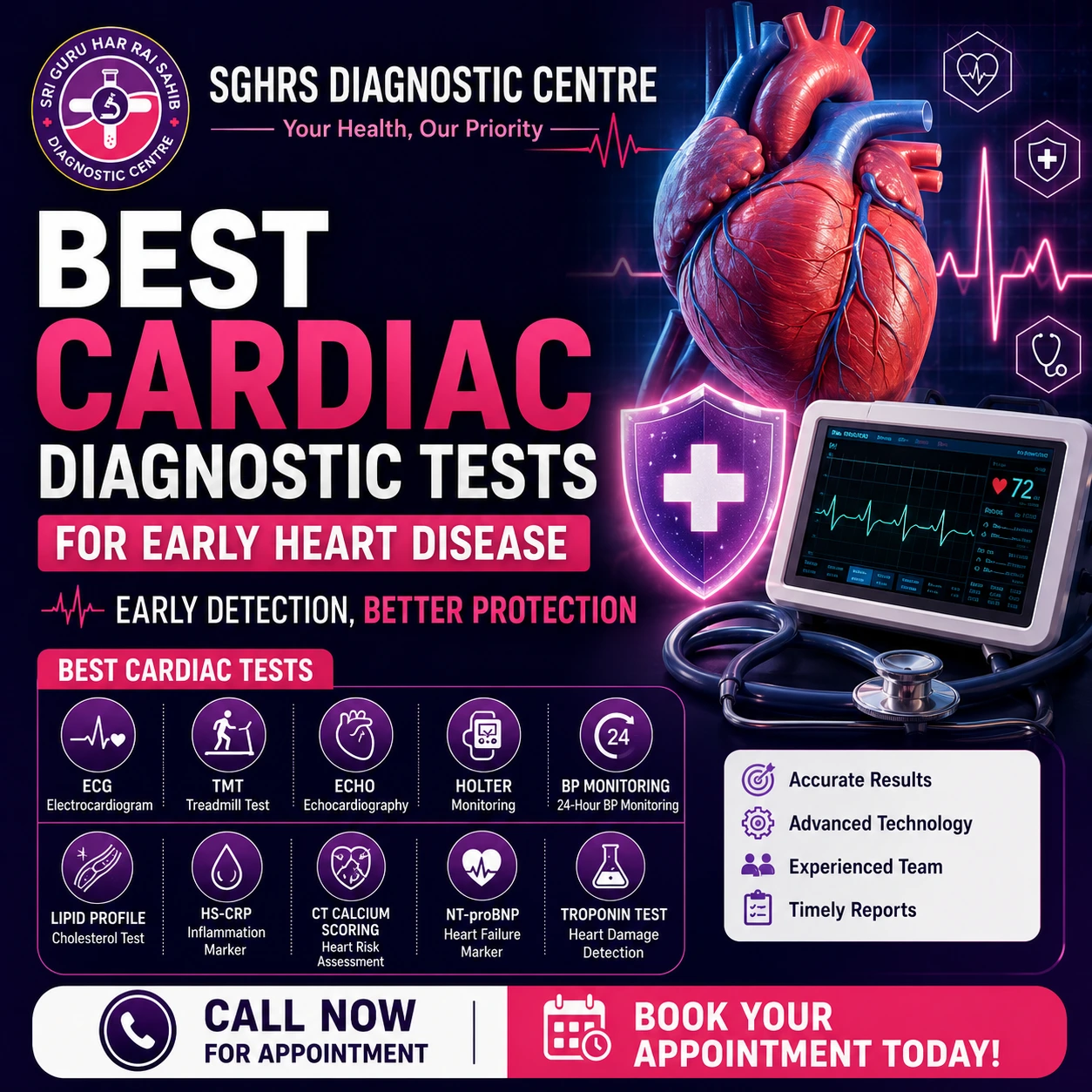
Heart disease remains one of the leading health concerns worldwide, and early diagnosis plays a crucial role in preventing serious complications. Many heart conditions develop silently, showing little to no symptoms in the early stages. This is why cardiac diagnostic tests are essential for identifying potential heart problems before they become life-threatening.
At Sri Guru Har Rai Sahib Diagnostic Centre, Chandigarh, patients have access to advanced diagnostic facilities that help assess heart health accurately and efficiently. Founded by Dr. Amrit Pal Singh, the centre is committed to providing affordable and reliable diagnostic services to the community.
Many cardiovascular conditions, including coronary artery disease, arrhythmias, and heart valve disorders, can progress without obvious symptoms. Early detection through heart disease detection tests allows doctors to:
● Identify heart problems before symptoms worsen
● Reduce the risk of heart attacks and strokes
● Monitor existing heart conditions
● Develop effective treatment plans
● Improve long-term heart health
Regular heart health tests are especially important for individuals with:
● High blood pressure
● Diabetes
● High cholesterol
● Family history of heart disease
● Obesity
● Smoking habits
● Sedentary lifestyle
1. Electrocardiogram (ECG)
An ECG test is one of the most common and effective cardiac diagnostic tests used to evaluate heart rhythm and electrical activity. An ECG can detect:
● Irregular heartbeat (arrhythmia)
● Previous heart attacks
● Reduced blood supply to the heart
● Heart muscle abnormalities
The procedure is quick, painless, and provides valuable information about the overall functioning of the heart.
2. Echocardiography (2D Echo)
A 2D Echo test uses sound waves to create detailed images of the heart's structure and movement. Benefits include:
● Evaluates heart chambers and valves
● Assesses pumping efficiency
● Detects congenital heart defects
● Identifies heart muscle weakness
At Sri Guru Har Rai Sahib Diagnostic Centre, advanced echocardiography services help doctors accurately assess heart function and diagnose cardiac abnormalities.
3. Lipid Profile Test
A lipid profile measures cholesterol and triglyceride levels in the blood, including total cholesterol, LDL (bad cholesterol), HDL (good cholesterol), and triglycerides. High cholesterol significantly increases the risk of cardiovascular disease, so this test is often included in routine cardiac health screening programs.
4. Blood Pressure Monitoring
High blood pressure is known as the "silent killer" because it often causes no noticeable symptoms. Persistent high blood pressure can damage blood vessels, increase the risk of heart attacks, cause stroke, and lead to heart failure — making regular monitoring a critical part of preventive cardiac care.
5. Cardiac Risk Assessment Blood Tests
Several blood tests help identify factors that increase the risk of heart disease, including blood sugar (diabetes screening), HbA1c, C-reactive protein (CRP), kidney function tests, and thyroid function tests. These tests help physicians understand the patient's overall cardiovascular risk profile.
6. CT Scan for Cardiac Evaluation
Advanced imaging technology such as CT scans can help evaluate heart structures and blood vessels — detecting blockages in arteries, assessing blood flow, evaluating heart anatomy, and supporting early diagnosis. The centre offers advanced CT scan facilities with modern equipment designed to provide accurate imaging and reliable results.
You should consider scheduling cardiac diagnostic tests if you experience:
● Chest pain or discomfort
● Shortness of breath
● Rapid or irregular heartbeat
● Dizziness or fainting
● Excessive fatigue
● Swelling in the legs or feet
● High blood pressure
Even without symptoms, adults over 30 should consider periodic heart health tests, especially if they have risk factors.
When selecting a diagnostic centre for cardiac screening tests, look for:
● Advanced diagnostic technology
● Experienced healthcare professionals
● Accurate and timely reports
● Comprehensive heart testing facilities
● Affordable pricing
● Patient-focused care
Established with a vision to make quality healthcare accessible, Sri Guru Har Rai Sahib Diagnostic Centre provides a wide range of diagnostic services, including ECG, Echocardiography, Blood Tests, CT Scan, Ultrasound, and Digital X-Ray under one roof. Explore all diagnostic services available at the centre. The centre was founded by Dr. Amrit Pal Singh, whose mission is to provide affordable and dependable healthcare services to the community.
Early detection is the key to preventing serious cardiovascular complications. Regular cardiac diagnostic tests help identify heart-related issues before they progress into major health problems. Whether it's an ECG, Echocardiography, Lipid Profile, or CT Scan, these tests provide valuable insights into your heart health and support timely medical intervention.
If you are looking for reliable cardiac diagnostic tests and comprehensive heart health tests in Chandigarh, connect with Sri Guru Har Rai Sahib Diagnostic Centre. With advanced technology, experienced professionals, and a patient-first approach, the centre is committed to helping you take proactive steps toward a healthier heart.
Book your heart health screening today at Sri Guru Har Rai Sahib Diagnostic Centre or call +91 98724 22691.
1. Which cardiac diagnostic test is most commonly recommended?
An ECG is usually the first test recommended to evaluate heart rhythm and identify potential abnormalities.
2. How often should adults undergo heart health tests?
Adults above 30 should consider regular heart screenings every 1–2 years, especially if they have risk factors such as hypertension, diabetes, or a family history of heart disease.
3. Is a 2D Echo different from an ECG?
Yes. An ECG measures electrical activity, while a 2D Echo provides detailed images of the heart's structure and function.
4. Can cardiac diagnostic tests detect heart disease early?
Yes. Early-stage heart conditions can often be identified through appropriate cardiac diagnostic tests, allowing timely treatment and prevention.
5. Are heart screening tests painful?
Most heart screening tests, including ECG, blood tests, and echocardiography, are non-invasive and painless.