 By SGHRSDC Team
CT scans often arrive in our lives uninvited—during sudden pain, unexplained symptoms, or a doctor's serious pause. And when they do, myths come rushing in faster than hospital corridors at shift change. From radiation panic to misunderstandings about accuracy, misinformation has wrapped CT scans in unnecessary fear. Let's untangle the facts from the fiction and bring some calm to the conversation—because informed patients make confident decisions.
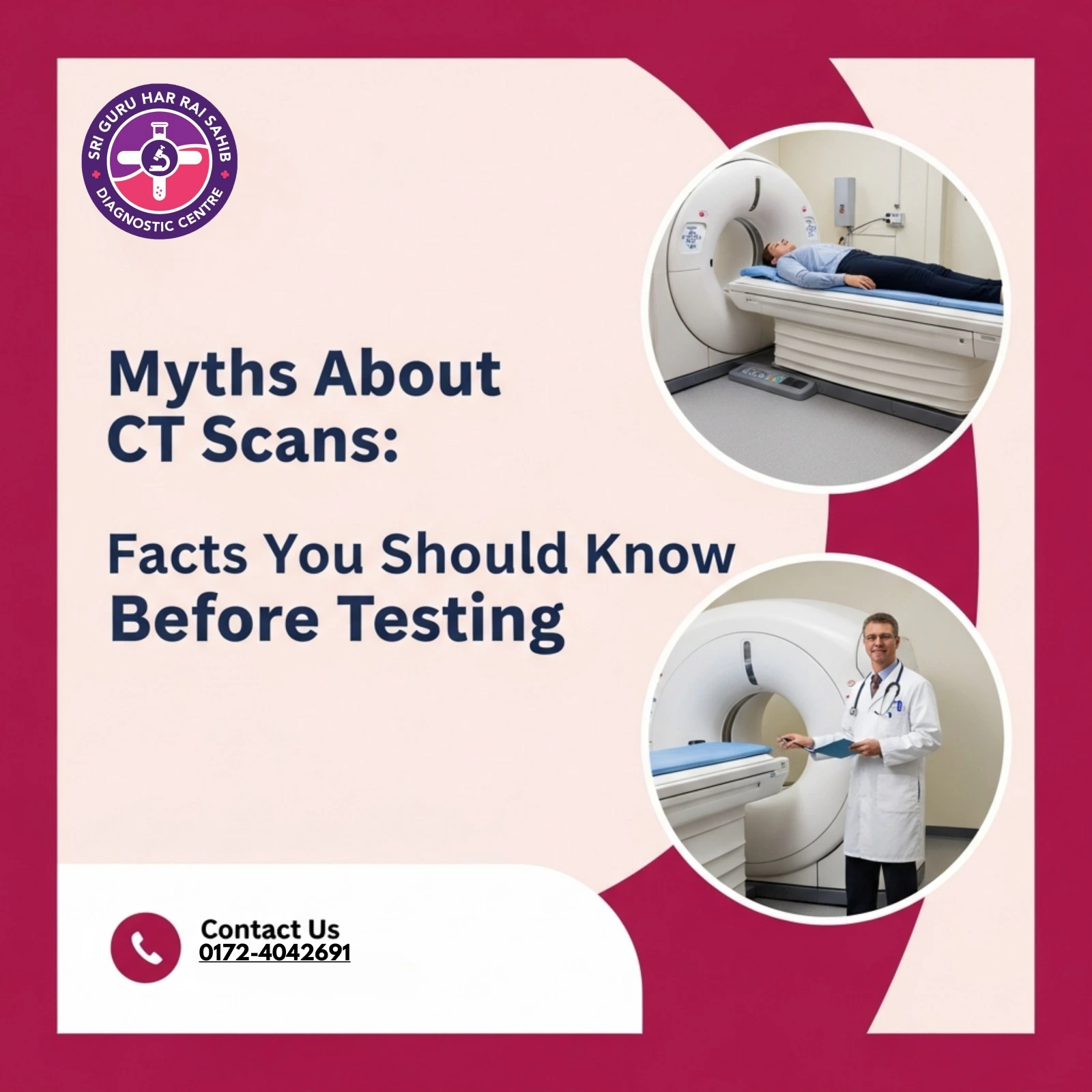
A CT (Computed Tomography) scan is an advanced imaging technique that combines X-rays and computer processing to create detailed cross-sectional images of the body. Unlike a standard X-ray, it doesn't just glance—it observes layer by layer.
Doctors rely on CT scans to detect internal injuries, tumors, infections, bone fractures, and organ abnormalities with remarkable precision. Yet despite its everyday use in modern medicine, myths about CT scans continue to thrive.
Let's meet them head-on.
This is the most common and persistent myth about CT scans.
Yes, CT scans use radiation—but so does flying in an airplane, living at high altitude, or even eating a banana (nature has a sense of humor). The key difference is dose control.
Modern CT machines are designed to use the lowest radiation dose possible while still producing accurate images. Radiologists carefully weigh the benefits against the risks before recommending a scan. In most cases, the diagnostic value far outweighs the minimal exposure.
Radiation fear without context is like avoiding sunlight forever because sunburn exists.
Many people believe CT scans are reserved for extreme cases. Not true.
CT scan uses extend far beyond critical care. They help evaluate:
Often, a CT scan helps rule out serious conditions rather than confirm them. Think of it as a reassurance tool as much as a diagnostic one.
A CT scan does not hurt. There are no needles involved unless contrast dye is required, and even then, the sensation is usually mild—a brief warmth or metallic taste.
The machine itself is open and quick. Most scans take just a few minutes. You lie still, the scanner hums softly, and before your playlist finishes its second song, you're done.
If anxiety had a voice, it would be louder than the scan itself.
A CT scan report may look intimidating at first glance, filled with medical terms and measurements. But behind every report is a trained radiologist translating images into meaningful conclusions for your doctor.
The report highlights:
It's not meant to confuse—it's meant to guide clinical decisions with accuracy and clarity.
And remember, a report is not a verdict. It's a map.
Quite the opposite.
CT scans are exceptionally good at detecting small and early-stage abnormalities that other imaging methods may miss. This includes tiny tumors, subtle fractures, internal bleeding, and early infections.
Early detection often means simpler treatment and better outcomes. In many cases, CT imaging prevents conditions from becoming serious in the first place.
Silence doesn't always mean health. CT scans help doctors listen better.
There are different types of CT scan, each designed for specific clinical needs.
Some common examples include:
Each type uses specialized protocols to focus on particular organs or systems. The technology adapts to the question being asked—precision is the whole point.
CT scans are not ordered casually, nor should they be avoided casually.
Doctors consider your symptoms, medical history, previous imaging, and current guidelines before recommending a scan. Avoiding a necessary CT scan due to fear can delay diagnosis.
On the flip side, unnecessary scans are discouraged by medical professionals themselves.
Medicine is not guesswork. It's judgment, experience, and evidence working together.
When it comes to imaging, trust is everything—trust in technology, expertise, and interpretation.
Centres like Sri Guru Har Rai Sahib Diagnostic Centre emphasize quality imaging protocols, experienced radiologists, and patient-first care. Accurate scans paired with expert reporting ensure that doctors receive reliable information to make timely decisions.
That reliability becomes especially important in fast-growing regions like Mohali, where access to advanced diagnostic services plays a crucial role in preventive and emergency healthcare.
Global health authorities continue to refine imaging standards. Today's CT scanners are safer, faster, and more precise than ever before.
Medical imaging follows the ALARA principle—As Low As Reasonably Achievable—to minimize radiation exposure while maintaining diagnostic quality.
In short: CT scans are not reckless tools. They are carefully calibrated instruments of modern medicine.
Most myths about CT scans are born from outdated information or half-heard stories. When replaced with facts, fear loses its grip.
CT scans don't exist to scare patients—they exist to help doctors see clearly, diagnose early, and treat effectively. When used responsibly, they save time, reduce uncertainty, and often save lives.
And that's not a myth. That's medicine.
If you've been delaying a scan due to confusion or fear, it may be time to replace doubt with clarity. For accurate imaging, expert reporting, and patient-focused care, Sri Guru Har Rai Sahib Diagnostic Centre continues to support informed healthcare decisions in Mohali.
📍 Visit the centre to discuss your diagnostic needs with experienced professionals and take the next step toward confident care.
Sri Guru Har Rai Sahib Diagnostic Centre
● Phone: 0172-4042691
● Mail: sghrsdc22@gmail.com
Get expert CT scan services in Mohali for accurate diagnostic imaging.